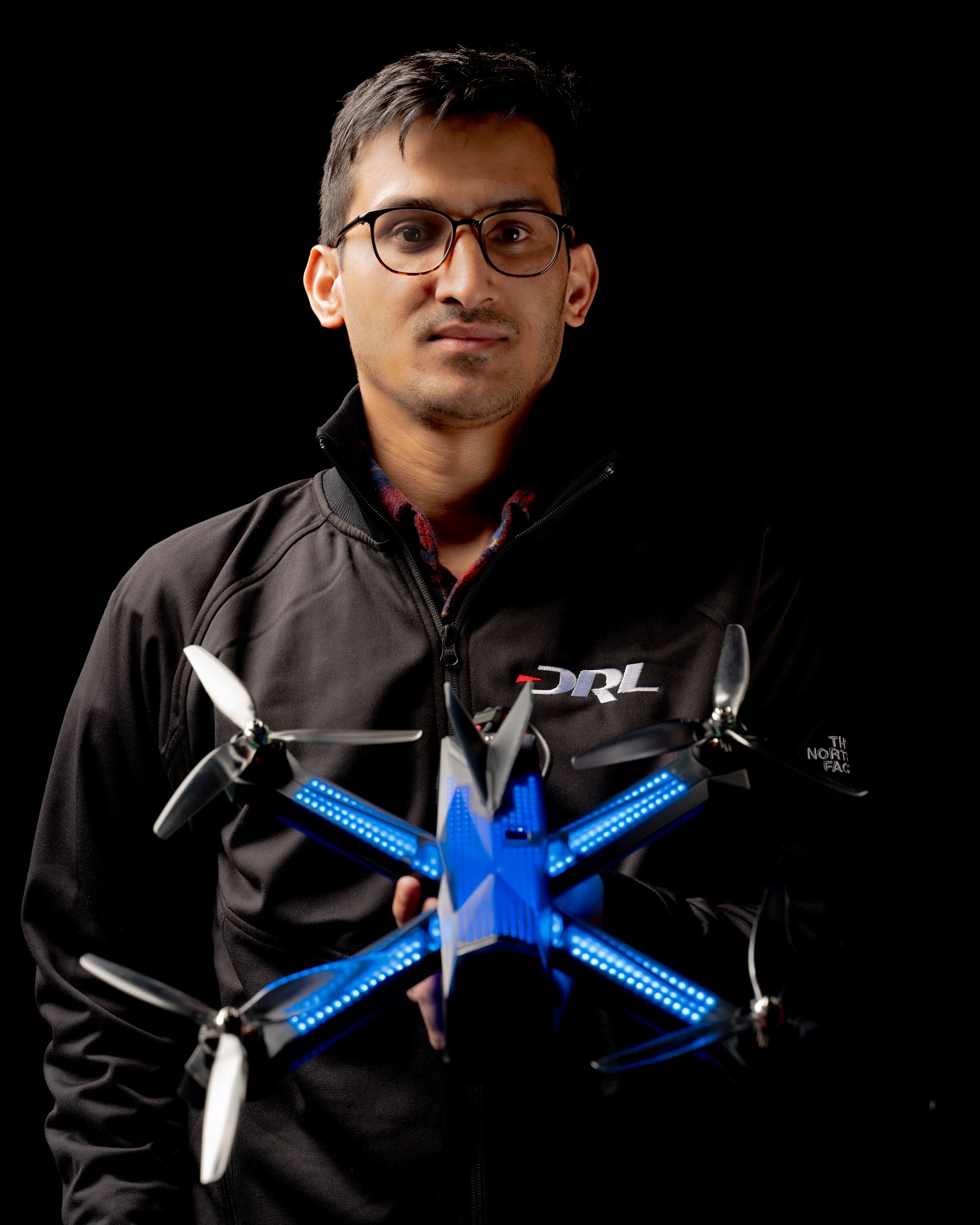
About
I am a robotics and controls research engineer working on safety-critical control and motion planning for dynamic systems. My work pairs rigorous theory with hands-on validation on real hardware, driven by one conviction: safety is the bottleneck for deployment of physical AI systems.
I believe the best ideas come by bridging the gap between theory and application - turning mathematical models into robust, practical systems that move the world toward full autonomy. Having worked in academic research and industrial research, I bring a unique blend of deep theoretical foundations paired with hands-on insights into solving engineering problems from the ground up using first principles. I believe algorithms should be intuitive and practical to implement in real-time systems.
Modern autonomous systems sit at an intersection of two established yet challenging paradigms. Model-based methods, including control barrier functions, Hamilton-Jacobi reachability, predictive safety filters, formal methods, and so on, provide strong state-space guarantees. However, this design often assumes an analytical model and idealized actuators and sensors. On the other hand, data-rich methods like reinforcement learning and learning-based perception have been successful in complex tasks yet cannot guarantee safety and remain one step away from failure for untrained events.
Real systems often reside at the intersection of these two methods and are dynamic. Can we design robot behaviors that can adapt dynamically to changing events while using learning-based methods for vision and planning? The answer is often a hybrid solution, developing novel constrained-optimization-based planning and control methods that can adapt dynamically and can also gurantee safety.
My current research lies here, leveraging the mathematical properties of the dynamical system and control methods that utilize real-time data and online learning for safe control and planning of autonomous systems.
Research interests
- Constrained control and optimization for motion planning, control and coordination
- Safe control and learning, adaptive autonomy
- Decision-making under uncertainty
- Distributed and decentralized control, estimation, and multi-vehicle coordination
Application Areas: dynamic systems, UAVs, autonomous vehicles, multi-agents and robots
Note : I did not use AI to create these sections
I am currently a Visiting Researcher in the ETAIC Lab at the University of Texas at Arlington (host: Dr. H. Eric Tseng, )
Updates
- Started Visiting Researcher Position at at ETAIC Lab , working in the inteesection of safe control and RL for robotics.
- C1. Thapa S., Qi Z. A Modular State-Machine Based Event PID Controller. Submitted to the American Control Conference (ACC) 2027.
- C2. Thapa S., Tseng E. A Feasible Entry Set for the Handoff between Global and Local Planners in Parallel Parking. In preparation for submission to the American Control Conference (ACC) 2027.
- T1. Thapa S. A Comparative Tutorial on Autonomous Quadrotor Trajectory Tracking Control: PID, State-Dependent LQR, Geometric SE(3), and Nonlinear Adaptive Control. In preparation for arXiv release.
You can view my publications, research, and CV for details.
Selected Research & Projects
- You can view my publications, research, and CV for details.
- Selected Research & Projects
- Current Research Projects
- Background
Current Research Projects
Multi-Agent RL and Safe Control — Current Research in Collaboration with Dr. Eric Tseng at UTA
- Multi-agent reinforcement learning for cooperative tasks, with a safety layer based on time-varying control barrier functions; implemented on Hugging Face-compatible microbot platforms, extending prior lab work on Unitree humanoid whole-body control.
Control and Planning
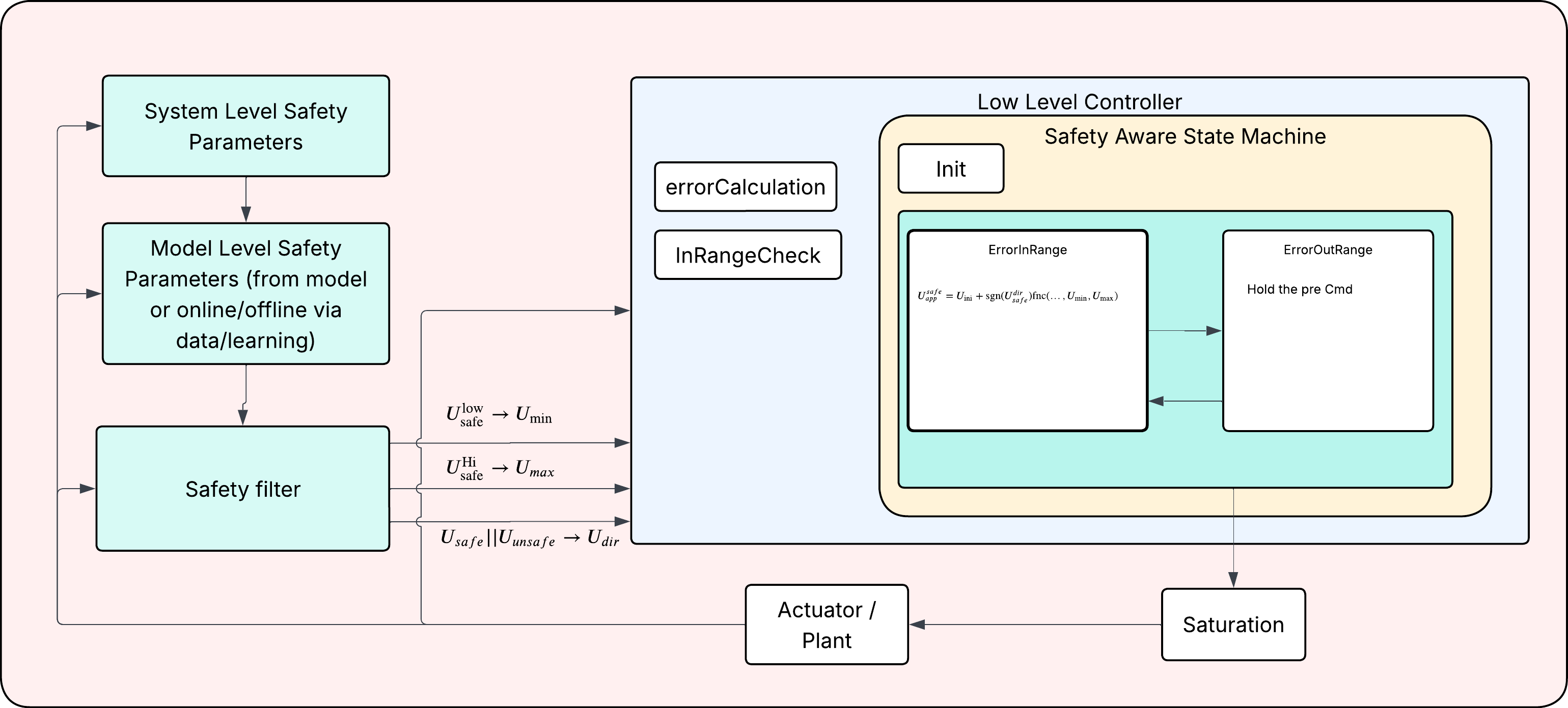
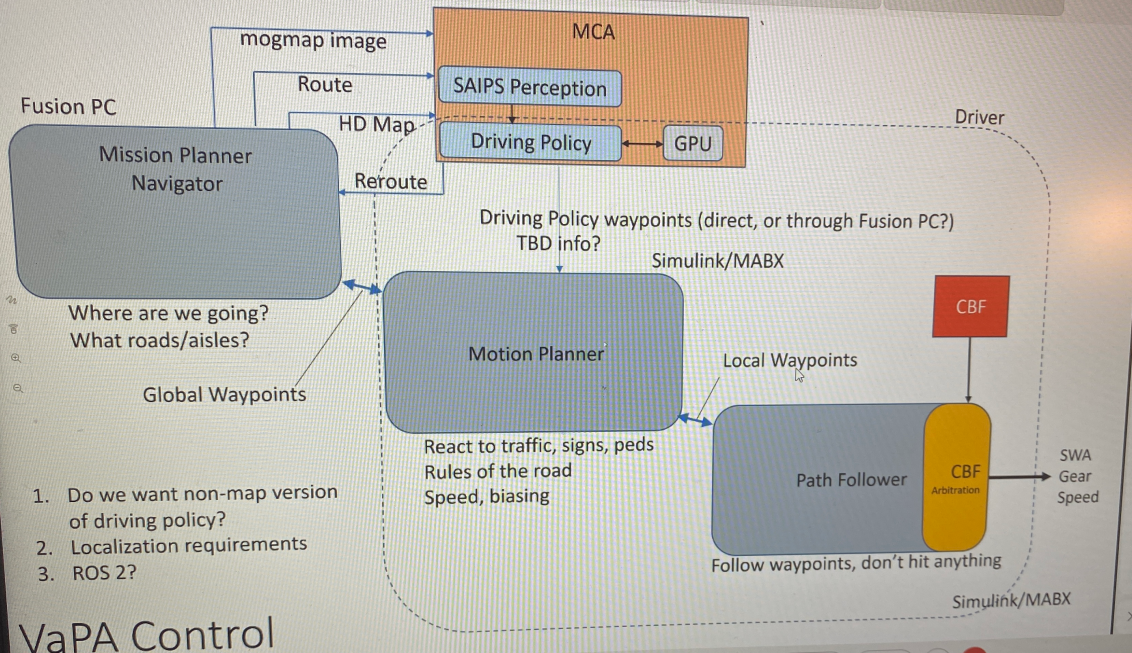
- Constrained Control and Planning for autonomous vehicles, certified handoff from a sampling-based planner to a local low-level geometric planner.
- Learning-based event-PID with safety guarantees.
Autonomous Quadrotor UAV Control

- Cascaded PID, state-dependent LQR, nonlinear Lyapunov-based, sliding-mode, backstepping, geometric SE(3), and Cartesian impedance controllers for quadrotor trajectory tracking.
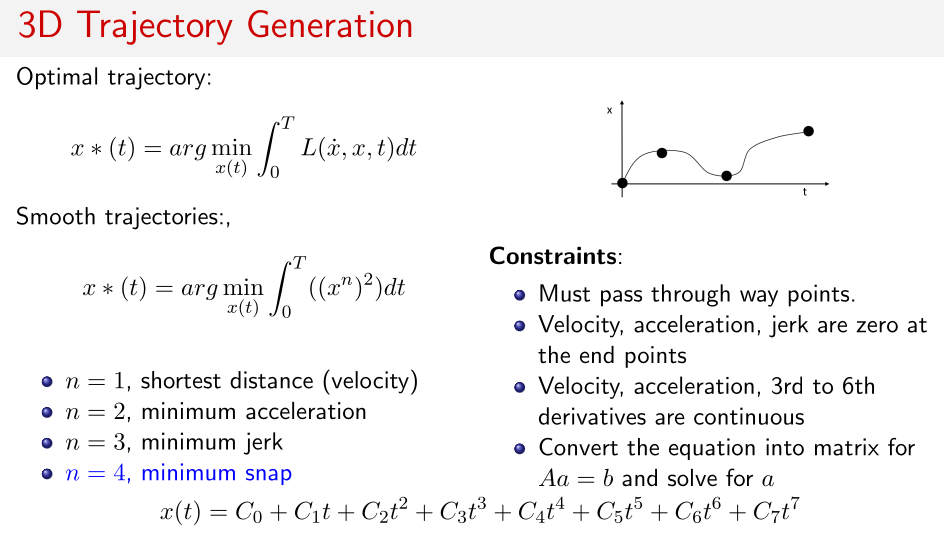
- Geometric attitude control and differential-flatness-based minimum-snap trajectory generation.
- End-to-end autopilot integrating state estimation, planning, and control, validated in MATLAB/Simulink, Gazebo, PX4 SITL, ROS, and on real quadrotor hardware.
Cascaded PID Control in PX4
State-Dependent LQR for Trajectory Tracking
Full-state time-varying LQR designed and implemented in real time in Gazebo and PX4. 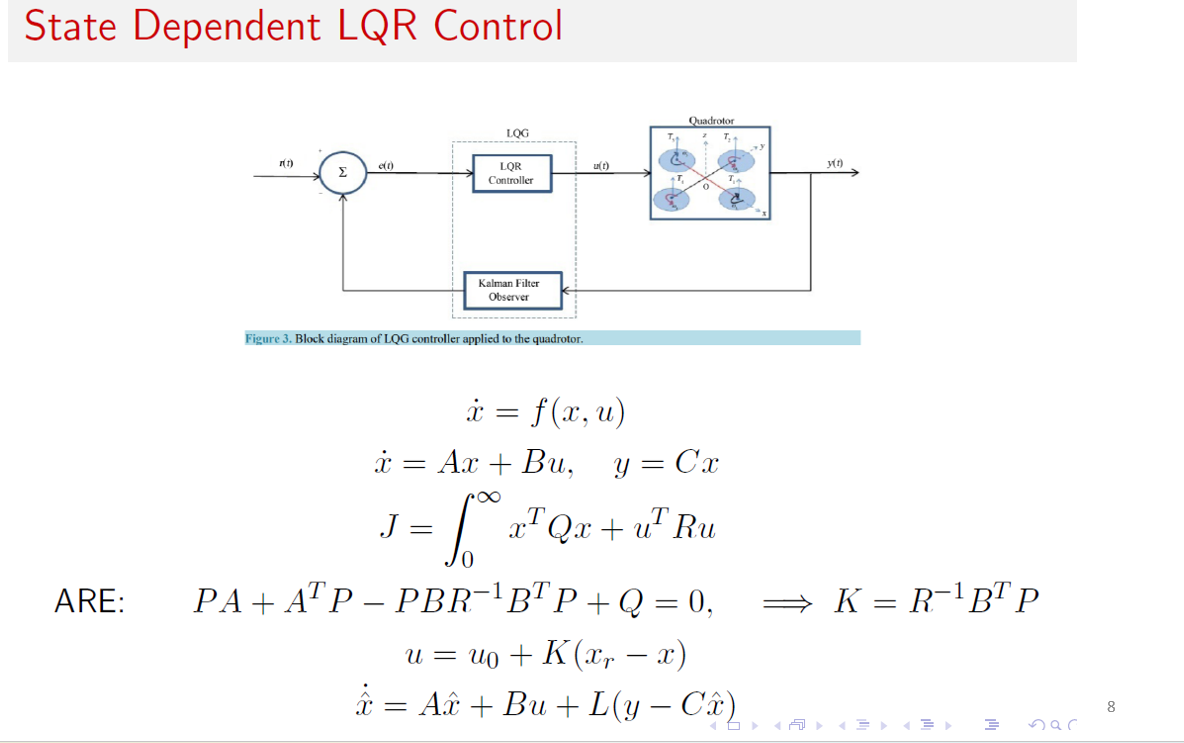
Offboard Velocity Control
Minimum-Snap 3D Trajectory Generation
Distributed Control, Coordination, and Manipulation
M.S. research at Oklahoma State University with Dr. He Bai (CoRAL Lab), jointly with Dr. J. Á. Acosta (University of Seville, Spain).
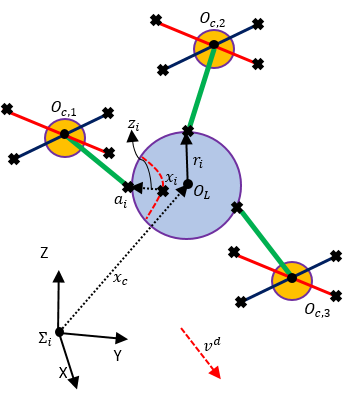
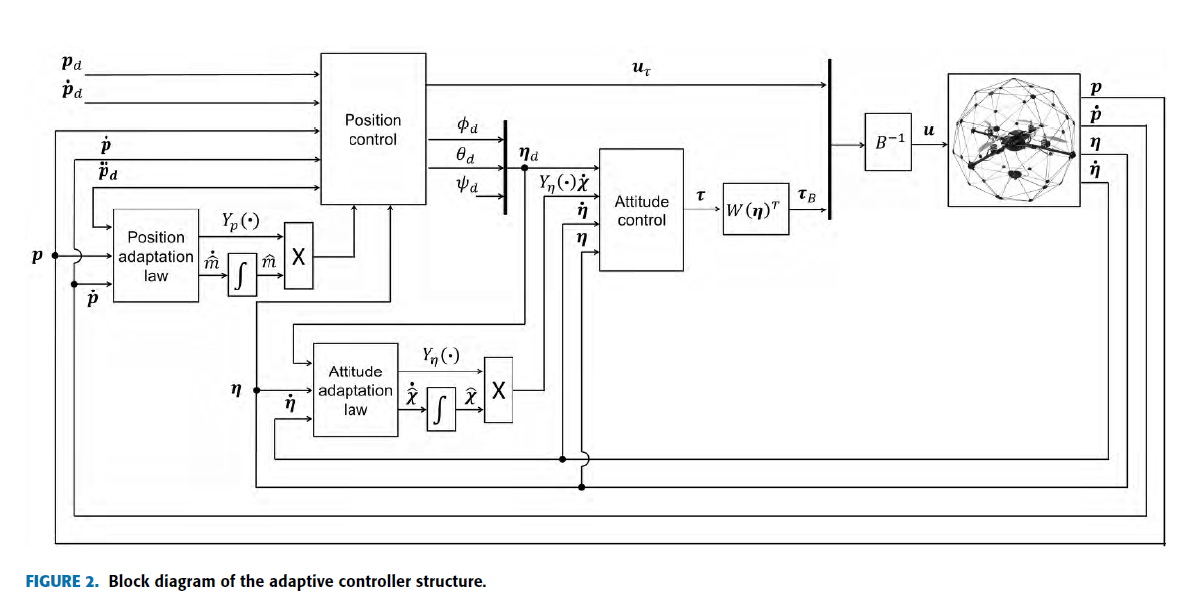
- Decentralized multi-robot control framework for cooperative aerial manipulation: multiple quadrotor UAVs transport a shared payload without constant inter-robot communication.
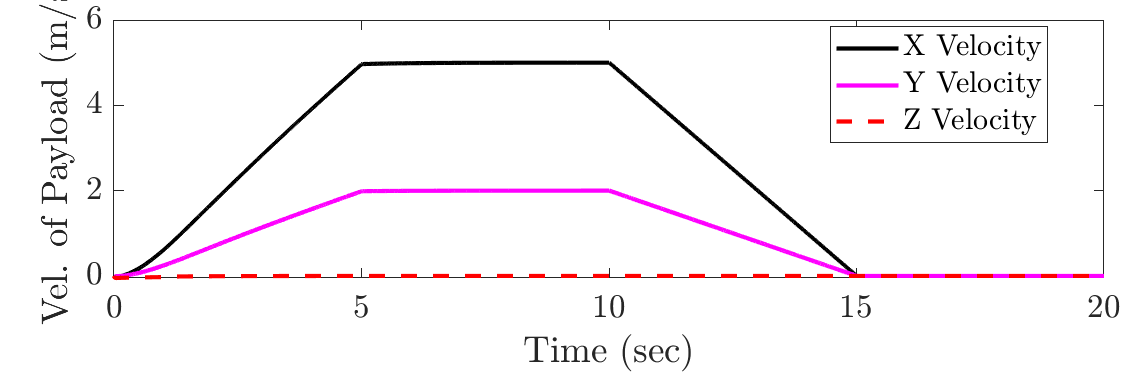
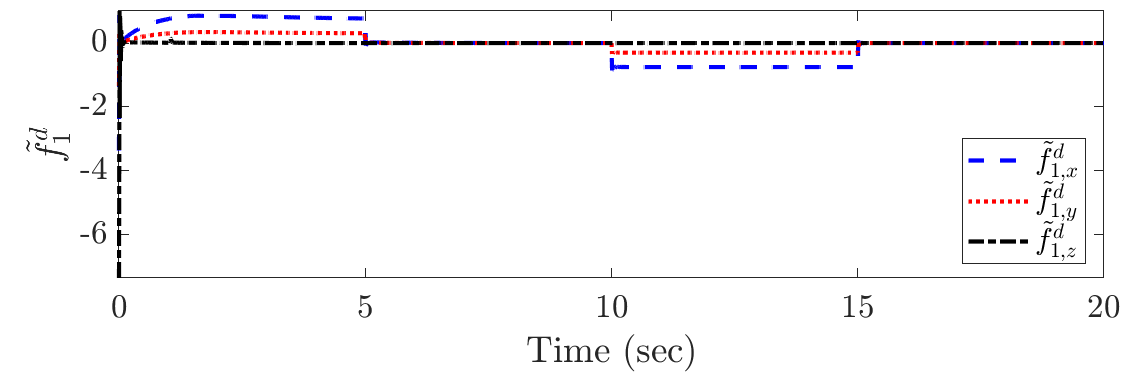
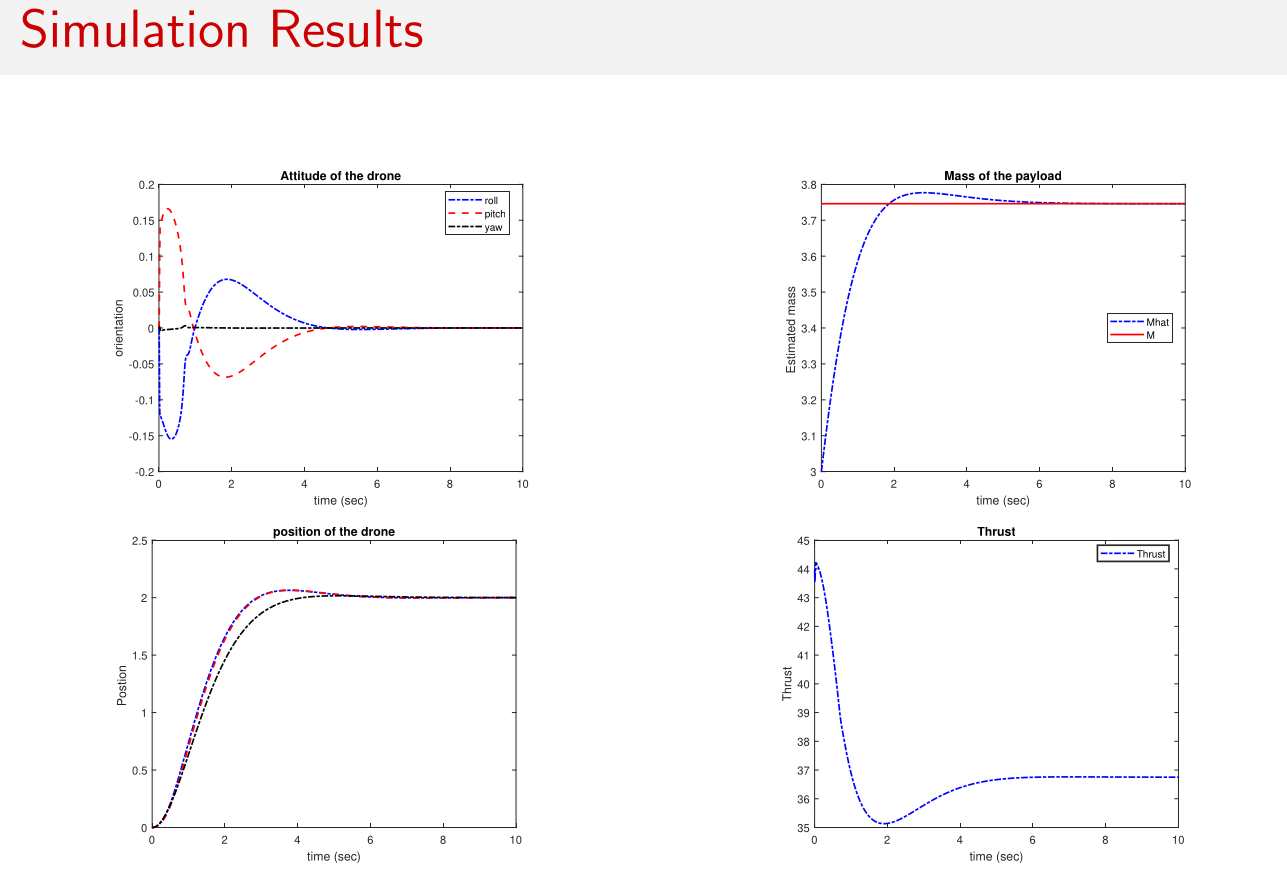
- Adaptive force-sharing controllers regulate payload forces while all agents coordinate their motion, with stable transport under unknown payload mass and external disturbances — validated in simulation and physical flight tests.
Related publications:
- [J2] Thapa S., Bai H., Acosta J.A. Cooperative Aerial Manipulation with Decentralized Adaptive Force-Consensus Control. Journal of Intelligent & Robotic Systems (JINT), 2020.
- [C1] Thapa S., Bai H., Acosta J.A. Cooperative Aerial Load Transport with Attitude Stabilization. American Control Conference (ACC), 2018.
- [C2] Thapa S., Bai H., Acosta J.A. Force Control in Cooperative Aerial Manipulation. IEEE ICUAS, 2018.
- [C3] Thapa S., Bai H., Acosta J.A. Cooperative Aerial Load Transport with Force Control. IFAC NAASS, 2018.
Cooperative Manipulation of an Unknown Payload
Cooperative Attitude Control
Cooperative Control with Time-Varying Velocity
Aerial Manipulator Flight Test
Learning for Control and Estimation
- Concurrent-learning adaptive control for a team of robots transporting a common load, enabling real-time estimation of unknown parameters (payload mass and drag) while driving all agents and the payload to a desired trajectory.
Guarantees parameter convergence and improves transient performance by reusing past data to relax excitation requirements, with accurate force regulation and synchronized motion in simulation.
- [J1] Thapa S., Self R., Bai H., Kamalapurkar R. Cooperative Manipulation of an Unknown Payload with Concurrent Mass and Drag Force Estimation. IEEE Control Systems Letters (L-CSS), with CDC presentation option, 2019.
Drag Force Estimation
Contact Force on the Payload
Non-linear Adaptive Geometric Control
Autonomous Vehicle Planning and Control
Research at Ford Motor Company, Research & Advanced Engineering (advisor: Dr. H. Eric Tseng, NAE Member).
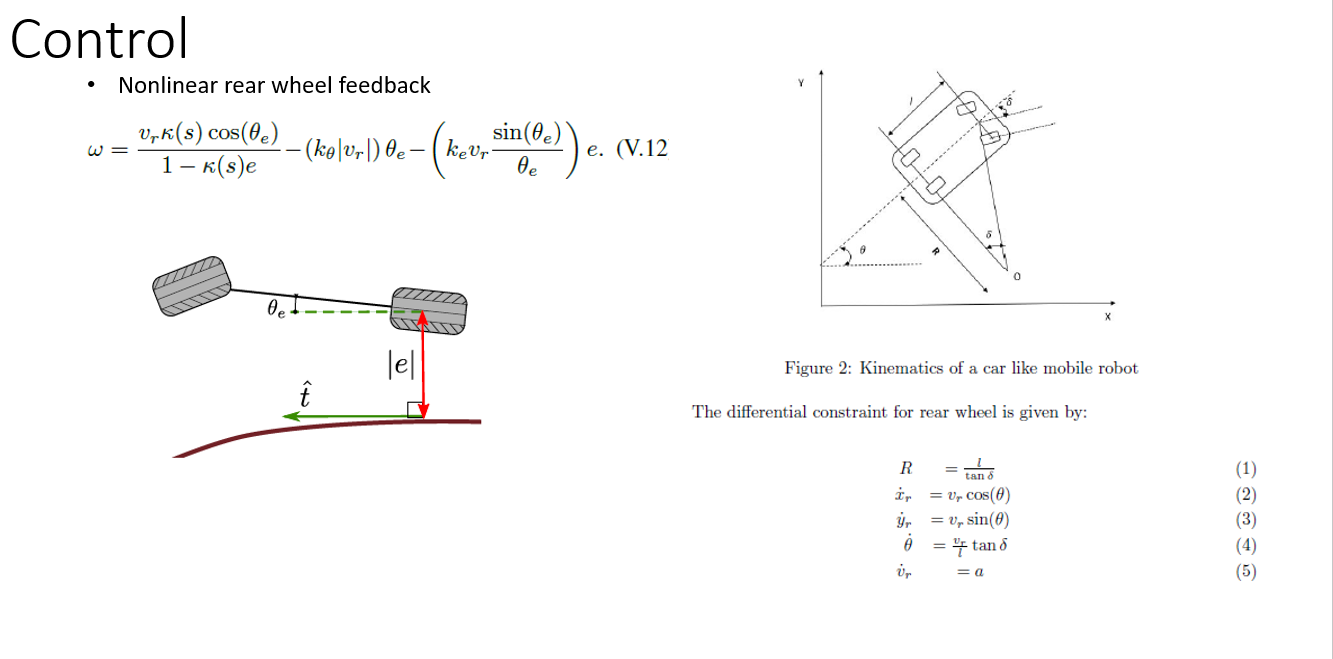
- Continuous-curvature (clothoid-based) path planner and nonlinear rear-wheel feedback lateral controller for autonomous parallel parking and auto-hitch (SAE L2/L3).
- State machines and control-barrier-function safety certificates for autonomous function transitions and fault handling.
- Trajectory-tracking benchmarks (pure-pursuit, LQR, PD, backstepping, nonlinear feedback); validated in simulation and on dSPACE real-time hardware.
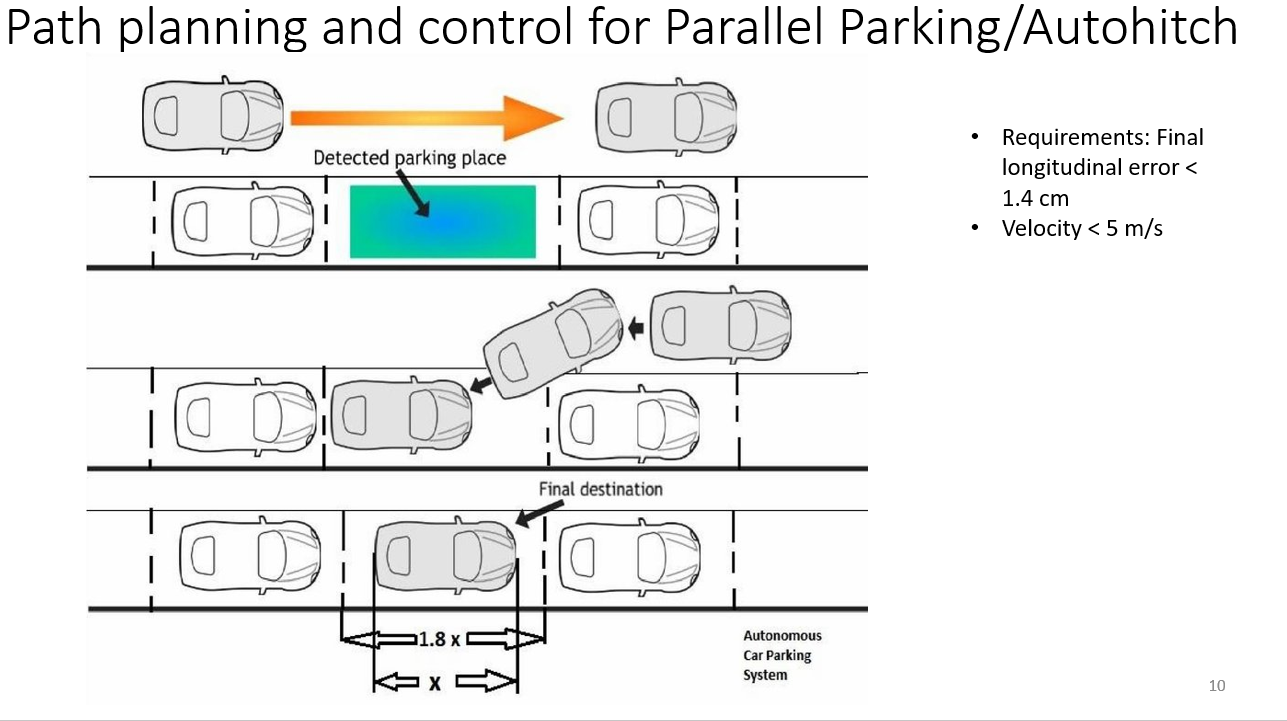
Clothoid-Based Path Planning
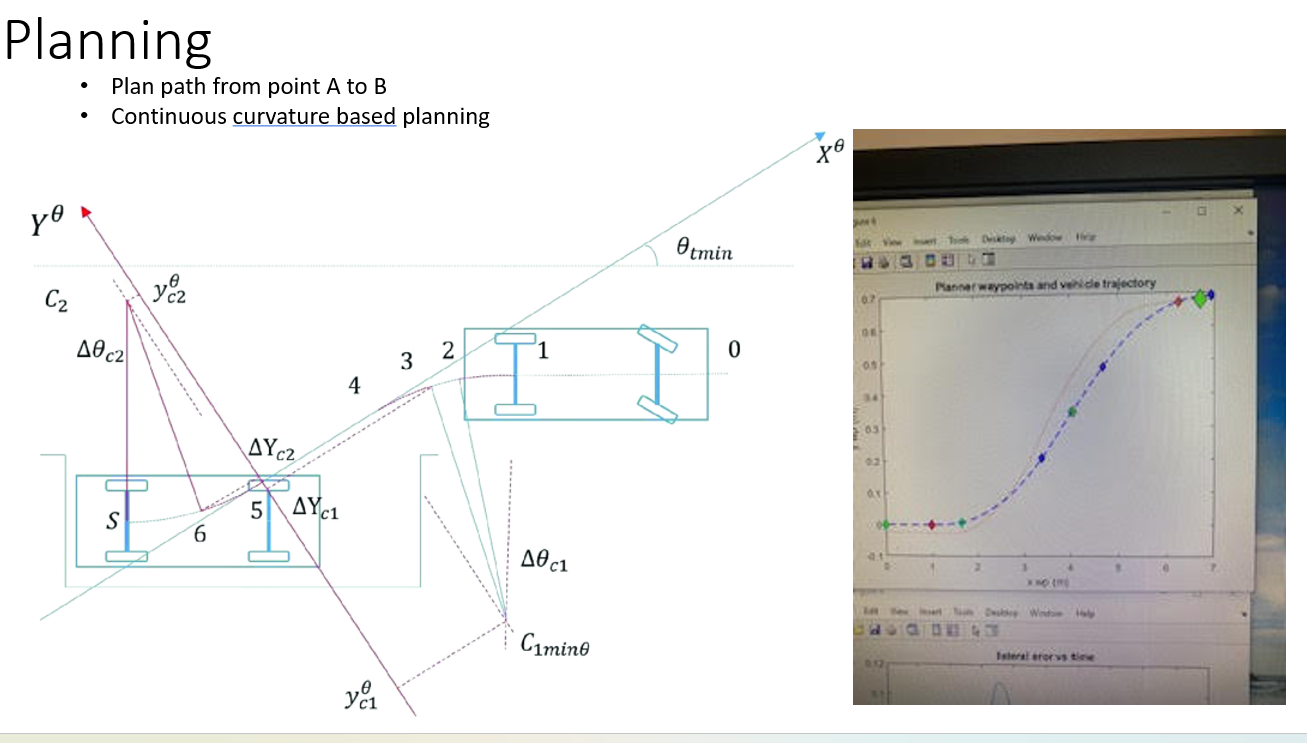
Non-linear Rear-Wheel Feedback Control
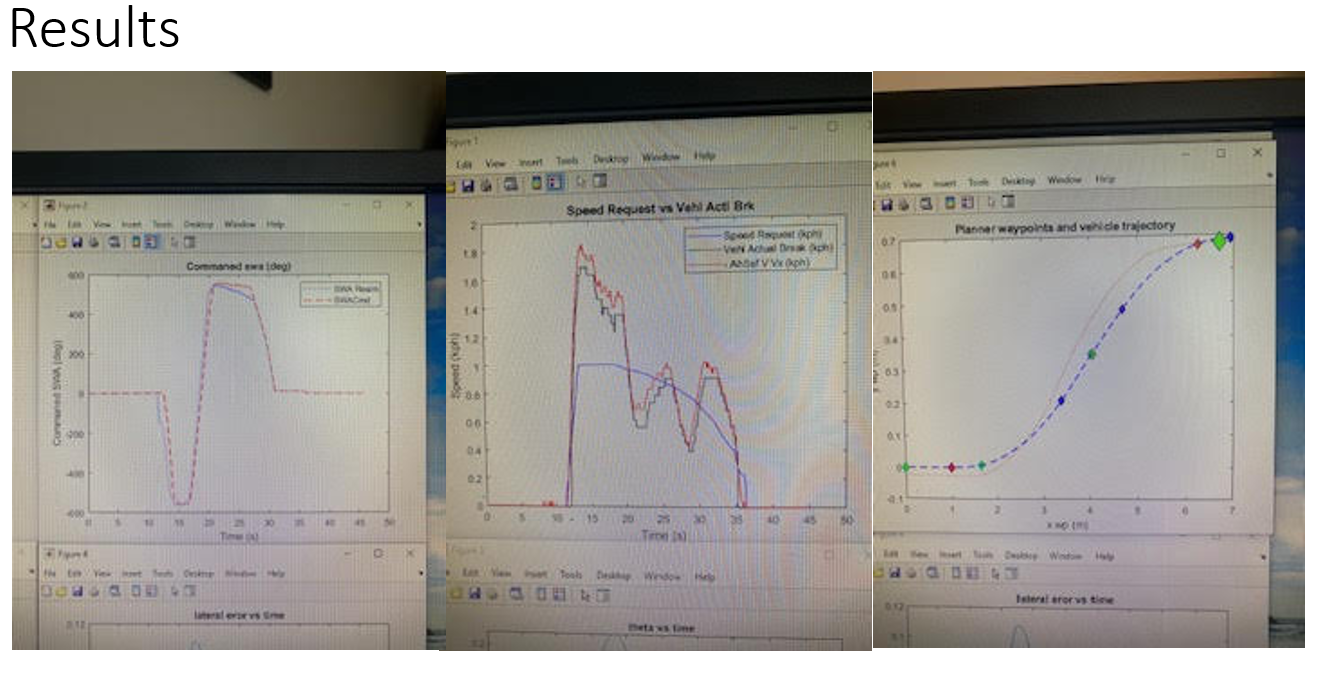
Vehicle Dynamics with Cruise and Lateral Control
Pure-Pursuit Control
Background
- M.S., Mechanical & Aerospace Engineering — Oklahoma State University, 2018 (Control Theory & Robotics; advisor Dr. He Bai)
- B.S., Mechanical Engineering — McNeese State University, 2015
Experience: Visiting Researcher, UT Arlington (present) · Tech Lead & Senior Controls Research Engineer, Amogy · Research Engineer (Autonomous Driving), Ford R&A · Senior Controls Engineer, The Drone Racing League · Graduate Research Assistant, Oklahoma State University.
Full details are on my CV.
Contact: thapasandesh1@gmail.com